 |
November 11, 2011 -- President Barack Obama and First Lady Michelle Obama
watch the retiring of the colors aboard the USS Carl Vinson, docked at North Island
Naval Station in San Diego, California. (Official White House Photo by Pete Souza) |
Daisy Bates (November 11, 1914 – November 4, 1999) mentored the students known as the Little Rock Nine, beginning with the the federal court case,
Aaron v. Cooper, which set the stage for the 1957 desegregation of Central High School. Although Wiley Branton of Pine Bluff was the local attorney for the NAACP, Bates, in her capacity as president of the Arkansas Conference of Branches, was recognized as the principal spokesperson and leader for the forces behind school desegregation. For much of the school year, she was in daily contact with the national office of the NAACP in New York as segregationists battled to destroy the NAACP in Arkansas as well as to intimidate her, her husband, and the Little Rock Nine and their families into giving up the struggle. In recognition of her leadership, the national Associated Press chose her in 1957 as the Woman of the Year in Education and one of the top ten newsmakers in the world, and her prominence as one of the few recognized female civil rights leaders of the period led to her selection as the only woman to speak at the Lincoln Memorial at the 1963 March on Washington. Beginning in 1941, she and her husband, L. C. Bates, had published the
Arkansas State Press, a weekly newspaper covering civil rights issues and prominent African Americans in the state. The paper folded in 1959 after an advertising boycott by white businesses, and Bates moved to New York City where she wrote a memoir of her experiences,
The Long Shadow of Little Rock. In 1968, she returned to Arkansas and became the executive director of the Mitchellville Economic Opportunity Agency, a federal anti-poverty program.
Birthdays
Shirley Graham Du Bois (November 11, 1896 – March 27, 1977) studied at the Sorbonne before enrolling in Oberlin College, earning a BA in 1934 and a master's degree in music in 1935. She was then appointed director of the Chicago Negro Unit of the Federal Theater Project, part of WPA, she wrote musical scores, directed, and did additional associated work. In addition to musicals and drama, she wrote a number of award-winning biographies of African Americans for young readers. She married W.E.B. Du Bois in 1951, the second marriage for both. She was 54 years old and he was 83.
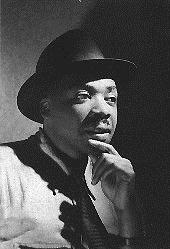
Claude Clark (November 11, 1915 - April 21, 2001) grew up in Philadelphia after relocating there from Georgia with his parents at the age of seven. He studied at the Philadelphia Museum of Art and the Barnes Foundation in Merion, Pennsylvania. While at the Barnes Foundation he also taught art in the Philadelphia public schools and worked through the Federal Arts Project of the WPA. He taught at Talladega College in Alabama from 1948 to 1955 before moving to California where he studied and taught Merritt College, and earned an MFA from the University of California at Berkeley. He helped curate the first national African American exhibition at the Oakland Museum in 1967. His work focused on African American culture, including dance scenes, street urchins, marine life, landscapes, and religious and political satire images executed primarily with a palette knife.
 |
| Freedom Morning by Claude Clark, 1941 |
 |
| Men With Machetes by Claude Clark |
LaVern Baker (November 11, 1929 – March 10, 1997) had several hit records on the pop chart in the 1950s and early 1960s. Her most successful records were "Tweedlee Dee" (1955), "Jim Dandy" (1956), and "I Cried a Tear" (1958). She was married to comedian Slappy White from 1959 to 1969. After the couple divorced, she became entertainment director at the Marine Corps Staff NCO club at Subic Bay in the Philippines where she remained after a USO tour appearance until the base closed in 1988. In 1991 she became the second female solo artist inducted into the Rock and Roll Hall of Fame, following Aretha Franklin in 1987.

Fred Luter Jr. (born on November 11, 1956) became the first African American president of the Southern Baptist Convention in 2012. He has been senior minister of the Franklin Avenue Baptist Church in New Orleans since 1986, increasing the size of the congregation from 65 to over 7000 during that time. He began his career as a "street preacher" in 1977 in New Orleans' Lower Ninth Ward following his conversion after a motorcycle accident.

Barrington Irving (born November 11, 1983) is best known as the youngest person and the first African American pilot to circumnavigate the globe. After high school he turned down football scholarships, instead accepting a Florida Bright Future Scholarship, which helped him to pursue aviation. As a result of volunteer work teaching youth about aviation opportunities, he was awarded the $100,000 Florida Memorial University/ U.S. Air Force Flight Awareness Scholarship in 2003. In 2005, Irving founded the non-profit Experience Aviation, Inc. The corporation was intended to educate and inspire youth about aviation-related careers.
Events
On November 11, 1901, Alabama's Constitution was ratified by statewide vote in an election fraught with corruption. Following the trend of other southern states in this period, Alabama used the constitution to effectively disfranchise blacks and poor whites. Many of the votes in favor had come from African Americans who were unaware of the provisions that would ultimately remove their power to cast ballots. During the years from 1901 to 1908, the number of registered African-American voters in Alabama would decline from 79,000 to fewer than 4,000. With hundreds of amendments, the 1901 Constitution carried the distinction of being twice as long as the constitution of any other state.
On November 11, 1951 Janet Collins made her debut in Giuseppe Verdi’s
Aida as the first African American ballerina at the Metropolitan Opera. Following her historic hiring she had a three-year run at the Met, with
Aida followed by
Carmen and
La Gioconda in 1952 and Samson and Delilah in 1953.
On November 11, 1979 the Mary McLeod Bethune Council House in Washtington, D.C. was opened to the public. It was the home of Mrs. Bethune from 1943 to 1955, as well as the headquarters of the National Council of Negro Women. It now contains the National Archives of Black Women's History, and passed to the National Park Service in 1995.
Photo Gallery
 |
On November 11, 1984 Reverend Martin Luther King, Sr. died of a heart attack in Atlanta,
Georgia. Better known as “Daddy King,” he was the father of famed civil rights
leader Martin Luther King, Jr. and was himself, an early civil rights leader. |
|
November 11, 2011 -- President Barack Obama and First Lady Michelle Obama
watch the retiring of the colors aboard the USS Carl Vinson, docked at North Island
Naval Station in San Diego, California. (Official White House Photo by Pete Souza) |
 |
November 11, 2012 - Top Fuel driver Antron Brown started Sunday with a losing effort and burned hands. He ended
the day as the NHRA Top Fuel champion, the first African American driver in history to win a major auto racing title |
Publications
 |
| "The First Vote," Harper' Weekly, November 11, 1867, by A.R. Waud |
 |
| Jet Magazine. November 11, 1976. |
 |
Before We Were Black by Eric A. McMiller by Eric A. McMiller.
$9.95. 53 pages. Publisher: XLibris (November 11, 2008) |
.


